SPARTACUS
The Policy Testing Process
Bookmarks on this page
The Process
Policy elements, policies, policy combinations
Policy relevance
The Process
- Sustainability policies used in the tests were searched from local authorities, literature and other research projects.
- The tests were carried out in the Helsinki Metropolitan Area in Finland, Naples in Italy, and Bilbao in Spain's Basque Country using state of the art models that the partners have previously implemented.
- The effects of the policies on environmental and social sustainability indicators were reviewed and the economic efficiency of them was analysed using a decision support tool developed in the project.
- If there were harmful side effects the policies were adjusted and tested again.
- If there were positive results in some cities but negative in others, the reasons for this were analysed.
- Eventually, general recommendations for urban sustainability strategies for European Cities were presented.
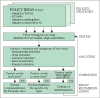 Figure 12
The policy testing process
Top of the page
Policy elements, policies, policy combinations
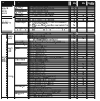
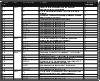
The process of testing urban policies began by defining thirty-seven policy elements, i.e. individual policy levers. Subsequently, the most promising ones were combined, first into policies and then, after further testing, into policy combinations. The number of the policies and policy combinations totalled thirty-three. At each stage, attempts were made to mitigate any possible negative side effects by redefining the measures tested.
Policy relevance
The SPARTACUS approach is of high political relevance for urban policy-makers. The methodologies developed for the SPARTACUS system have been designed to test and evaluate relevant practical policies at strategic level. The three test cities have been used as an experimental platform.
The policy elements and policies tested are mainly based on ideas developed from the literature and on general urban policy guidance. Some are also based on discussions with the Client-Partners and reflect policies that are under discussion in the test cities. A consensus was found among the test cities on relevant indicators although not all of these could be modelled.
Research on pricing policies has been emphasized both because of their effectiveness and because fair and efficient pricing is one of the main policy lines under development within the European Union. Test results also produced information that is relevant when formulating and evaluating other policies and measures. Such information includes estimates of CO2 emissions and consumption of oil products.
The project also aimed at providing general recommendations about policies that are efficient and will find general application.
The SPARTACUS team has maintained active contact with the local authorities of the test cities throughout the project and has aimed at allowing for the local needs and interests in the development of the system as well as in the design of the policy tests.
The European aspect of the project is very important, particularly given the diversity of European cities. The project has shown that not only is it feasible to design and implement a system for analysing urban policies to be applied across the EU, but that it is also possible to devise consistent policy packages that do make a difference when it comes to making very diverse cities more sustainable. These findings are particularly relevant at a time when innovative transnational planning projects are seeking to advance the principles and objectives of the European Spatial Development Perspective (ESDP). It is hoped therefore that the SPARTACUS approach can be carried forward to assist in these and other exciting new European planning activities.