PROPOLIS
Components


Graphical Presentation of the Project’s Components
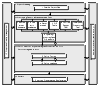
Graphical presentation of the project’s components and Work Packages
The graphical presentation of the project’s components indicating also the phasing of the project (phases I-IV) and the interrelationships between work packages is presented in the figure right.
It is important to note the loops between phase II and phase III and between WP9 and WP10. Phase II will first produce the system at the prototype level. Preliminary policy tests and analyses will be carried out. Based on that experience the system will be fine-tuned. Policy testing and subsequent analyses take place in several interactive rounds as optimum policy combinations are searched for.
Project management, networking and dissemination activities will continue from the start to the end of the project. Dissemination and exploitation will continue even after the project is finished.
The two-way arrows between the networks and other parts of the project indicate that the project is not only likely to gain input from outside networks but also produces input for them as well.
Project Planning and Timetable
The project is scheduled for 30 effective months. Taking into account the two holiday seasons the total duration of the project is 32 months.
The project will have four phases:
I Project Planning Phase (4 months)
II Developing Theory, Methodology and Tools (14 months)
III Policy Analyses (9 months)
IV Reporting (3 months)
The end of each phase and the start of the next phase will be a project milestone. Phase II, in which the major emphasis of work is, includes two additional milestones.
The mid-term review at the end of month 18 is a critical point for the project, as all the background work and tool development is scheduled to be operational. The mid-term review will verify this and, if necessary, the rest of the project will be rescheduled and reorganised in order to attain the final goals.
The milestones and their results are:
Milestone 1: Detailed Project Plan finalised (4 months)
Milestone 2: Basic concept finalised, demonstration of tools working individually (8 months)
Milestone 3: Demonstration of system prototype working, preliminary policy tests start (12 months)
Milestone 4: Mid-term review, demonstration of operational system, policy analyses phase starts (18 months)
Milestone 5: Results available from all test cities (27 months)
Milestone 6: Project completed (Total 30 months + 2 holiday months = 32 months).
A Mid-Term Assessment Report on the progress of the research and the partners’ plans for future exploitation strategy is to be submitted before the end of the 19th month from the date of commencement.
The project co-ordinator will organise a Mid-Term Assessment meeting at the end of the 20th month with all partners and the Commission’s representative. The purpose of this meeting will be to report on the progress to date and to redefine (if necessary) the work plan for the remaining part of the contract. Procedures for managing future exploitation of results will be discussed and assessed. A decision whether or not to continue the contract will be taken before the end of the 21th month having regard to the achievement of the specified objectives at this stage for the technical / scientific progress and co-operation and having regard to the exploitation perspectives for the results.
The mid-term assessment will include a review of the following targeted programme items:
- deliverables planned/achieved
- time schedule planned/achieved
- objectives of each WP planned/achieved
The major results to be obtained by mid-term and the assessment criteria, respectively, are:
- updated case city models/ working
- theory for environment feedback/ completed, indicators defined and adapted in the system
- theory for economic evaluation/ completed, indicators defined and adapted in the system
- raster methodology/ theory developed and indicators defined, methodology applied as a tool in the system
- GIS tools/ operational tool with interfaces
- Decision support tool/ operational tool
- Analysis and presentation tool/ operational tool with interfaces
Interfaces between the system components working/ demonstration of one policy run through the system in each case city.